All posts by

I was born and educated in Scotland and studied biochemistry and bass guitar in a rock band at St. Andrews University, isolated immune proteins from cattle blood by electrophoresis at Edinburgh University, developed zero gravity cell separation techniques at the University of Arizona and the National Aeronautics and Space Administration, and investigated gastric pathophysiology at the University of California, Los Angeles and the Medical University in Charleston. I've been writing from an early age; my work is published almost exclusively in peer-reviewed primary biomedical science journals. Chess has also been ever-present, over-the-board back in the day, now more and more online. Backyard astronomy, scuba-diving, sailing, skiing and voracious reading have also been constant obsessions, joined most recently by Argentine Tango. I live by a tidal creek on a barrier island in the South Carolina delta, the cradle of the river and the sea.

Tango Scream, or El Cielo en Tus Ojos

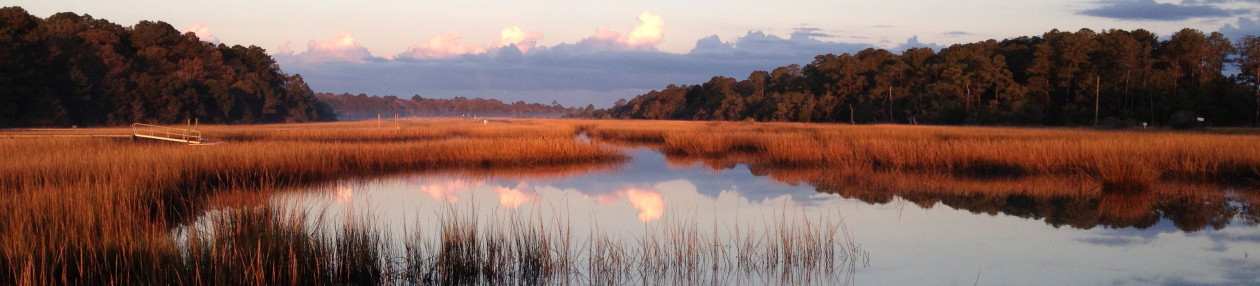
The sun was sinking rapidly as I crossed the lawn, headed for the dock. Settled into the weathered bench at the pierhead, facing west, front row center at this daily celestial spectacle, I called up video on my phone. Holding it steady, I panned slowly clockwise, starting at the boardwalk, with Rushland in the background, and progressing through darkening woods towards complex many-colored clouds accumulating on the horizon where the sun had just set. I posted the video on Tango Folly.com, typed “Hi, Maria… just keeping in touch”, attached Edvard Munch’s “Scream”, and clicked Send. Tantalizing moments passed. A chirp alerted me to incoming text. “In tango class; wish you were here… Maria.

I watched the tide infiltrating the mudflats before me. I figured within an hour I’d be able to navigate my kayak down Murray Creek to the Stono River, cross over with rapid determined strokes, and finally float into the little creek that petered out at the bottom of Maria’s garden. She’d be back from class by then, nursing chilled vinho verde on her rooftop and listening to Carlos di Sarli. However, by the time I translated thought into action, gliding towards the river as a blood red moon rose behind me, a light mist had settled over the sea marsh. Poor visibility and the rising tide conspired to mislead me. Somehow I missed the turn into Maria’s creek, and was back-paddling along a palisade of marsh grass when I felt a light bump near the stern and then a more solid impediment that stopped me dead in the water.

I peered over the side, and saw an ice-chest caught between the kayak and the sea grass. The lid was dangling from a single hinge. Reaching into the chest, I pulled out a black bottle of gold-labeled champagne. More bottles were in there, wedged in place by baggies swollen with white powder. Fighting down a shrill adrenaline scream, I scanned the river and marsh around me. The river mist had dissipated. I saw no sinister blacked-out motor-yacht, only a placid expanse of salt grass, the river’s shifting moonlit surface, and the regular red blinks of a distant microwave tower. I considered my options, which boiled down to salvaging the chest, or leaving it behind, bobbing in my wake. Opportunity overruled caution. I stashed the bottles and baggies in the kayak’s bow, found my way into Maria’s creek, and moored a few minutes later at her dock to the strains of Osvaldo Fresedo’s “El Once” drifting down from her rooftop.

El Once” reminded me of the last, eleventh celebration of the annual Gran Baile del Internado in Buenos Aires in 1924, where an innocent prank had provoked the gunning down of a medical student named Ernesto O’Farrell. Civic outrage over the killing was fueled by its association with scandalous Tango. And here was I, seeking solace in Tango, in possession of apparent contraband, possibly risking death if tracked down by whoever was missing an ice-chest. More thoughtful now, safely ensconced in Maria’s hidden creek, my heartbeat back to normal, I reconsidered my options. Best was to report at once my discovery to 911, but I was wary of involving Maria. Not to mention explaining a questionable nocturnal kayak crossing of a river where just recently two men had drowned in a freak thunderstorm while fishing on an ebb-tide for spot-tail bass. Second-best was simply to return the champagne and baggies to the ice-chest, and to get on with my life, questionable though it might be.

As I loosened the kayak’s line and reached for the paddle, the final bars of “El Once” played out. The ensuing silence was broken by the low rumble of an outboard motor and I saw the red and green bow light of a small boat nosing its way up the creek. I muted my phone and held my breath. Maria had doused the candles ranged around her rooftop, and her silhouette leaning on the parapet was etched against racing clouds. And now came the first somber chords of “First Kill”, from the movie “Assassination Tango”. Instantly, the motor and the running light shut down. I crept incognito beneath the dock. I marveled at Maria’s sixth sense that had intuitively caught and sound-tracked the drama being enacted at the bottom of her garden. All I could see were dark shadows fringed in moonlight filtering down through the water oaks and conifers that lined the creek. An owl called from distant woods, bull-frogs croaked occasionally from the marsh, and fireflies flashed here and there.

The motor-boat bumped gently into my kayak, and a flash-light swept briefly over it and the deserted dock. Minutes ticked off as someone stepped silently ashore, paused, and then set off at a crouch towards the house. I messaged Maria, “Lock the doors, don’t open them to anyone…”  Matters were quickly getting out of hand. I could return my stash to the ice-chest, if I could find it, but first I’d have to disable the motor-boat to avoid pursuit. That would mean leaving Maria to deal with whoever was prowling around her home. Going to her rescue, a white knight on a charger, was laudable but useless, given that I was unarmed and that my martial triumphs happened only on chess-boards, and then infrequently. More and more, a call to 911 was mandatory. While dialling, rehearsing my story, I heard a cacophony of dog barks, a stifled scream, and someone stumbling in a frenzy back to the dock. I ducked out of sight. The moon re-emerged from a bank of clouds. “First Kill” seguéd easily into “El Cielo en Tus Ojos”.

Curses and a snarling hound interrupted Roberto Rufino’s anguished cry that he was disoriented, that his faith was broken, and that he saw the sky in the eyes of his beloved. I lay low, even as a 911 dispatcher asked what service I required, and what was the address? I whispered, “Police,” blanked on Maria’s address, added “Never mind”, and switched off. Next thing I knew, the outboard fired up, and the motorboat backed off from my kayak with grinding concussions, wheeled around, and sped off towards the river. The hound paced the dock, snuffling in frustration. It paused to sniff at a seam in the boards just above my cowering head, poured forth a paroxysm of barks, and then slouched off towards the house. My phone buzzed. “Max? Is that you down there?” A flashlight danced along the path from Maria’s house. Di Sarli’s orchestration embroidered Rufino’s refrain, “The sky in your eyes gives me courage, and increases my crazy desire to live.

Maria emerged from the shadows. She paused at the step onto the dock, one pale hand at her breast, and the other fingering the hem of her tango skirt. Botticelli’s Venus flashed before my eyes. Under the passionate spell of her crystalline soul, my hell in Eden was transformed. But all that had to wait. I embraced her silently, and nuzzled the pearled precinct of her ear. “I’ll be back,” I murmured, “I’ll explain later.” I untied the kayak, settled in, and paddled swiftly towards the river and the lost ice-chest. I soon left the shadowy confines of the creek, and found myself in open water. The moon was higher now in a clear star-studded sky. The fireflies had disappeared, and the bullfrogs’ choruses had died down.

As I made for the protective cover of sea-grass, hoping to blend into invisibility, I felt water sloshing around my flip-flops, and loose bottles of champagne and fat baggies of white powder shifting around in the bow. And then I noticed that the kayak was lower in the water than usual, and that paddling was now more strenuous. No doubt about it: I was sinking. The churning propeller of the motorboat must have torn a hole in the kayak. Waves began to slop over the gunwhale when I was still a hundred yards from the palisade of rushes where I’d found the ice-chest. Within seconds I was chest-deep in cold water, and the kayak was slipping out from under me, headed for the bottom. My struggle to get free was greeted by the raucous scream of a night-hawk, swooping low over the moonlit river.

Dragged down, kicking frantically free of the kayak, I drowned a scream by gulping a mouthful of water and swam for the surface, my eyes reaching for the distant starry sky. I was disoriented, my faith broken. In the awful loneliness of my ordeal, Maria was like a sun illuminating my eternal darkness and I lived again, her crystal soul sweetening my bitter cup. I was channeling the lyrics of the tango “El Cielo en Tus Ojos”, of course, but that simple recitation brought me back up, spluttering, treading water, and moments later found me swimming for the shelter of the marsh, where I found soft purchase in pluff mud, lay down shivering and breathless swaddled in sea grass, and wondered what next.

My kayak and the incriminating salvaged contraband were gone. All I had to do was get home, reassure Maria, and forget the whole story. I must have dropped off for a while, my thoughts revolving inexorably, as dreams tend to do, around swimming four hundred yards in twelve minutes to qualify as a volunteer scuba diver in the South Carolina Aquarium. I woke, chilled, thinking that the Stono River was no wider, that the current was slack at high tide, and that twelve minutes hence I could be back home. By the time I translated thought into action, Roberto Rufino’s tango vals assertion that the sky in his lover’s eyes gave him courage and chased away his suffering was beginning to sound hollow. An eternity later, I dragged myself, arms aching, onto my dock.

As I crossed the lawn towards my house, I noted that Sootie, the black bronze nude of Catalonian provenance reclining by the marshfront water-oaks, was smiling as always, non-committally. My phone, marinated in the brackish reality of low country waterways, and normally a dependable connection to all things relevant or otherwise, was dead. Maria would have to wait. I poured myself a gin and tonic and tuned into Budapest Radio’s classical tango stream. With timeliness worthy of Carl Jung’s synchronicity, “El Cielo en Tus Ojos” soothed the scream still echoing in my ears. Tomorrow to fresh woods, and pastures new.

Tango To Die For

“Try the other side,” said the beautiful doe-eyed attendant. Max was seated alone in business class, eagle-eyed at a starboard window, eager for a first glimpse of Beirut as the jet descended. He leapt out of his seat, slid over to a port window, and gazed transfixed at the ancient city, sprawled like a cat before a fire, unfolding below him, glowing gold in the setting sun. He lost valuable seconds snapping pictures on his phone. Moments later on final approach the jet passed over squalid shanties and piles of garbage, the stereotypical landmarks of Fodor’s “city of contrasts”, and pulled up at Gate 7. The flight attendant chided Max for unbuckling during descent, but smiled briefly when he said he was honored to visit her city for the International Tango Festival.

Emerging from passport control and baggage claim, Max ran a gauntlet of eager families and drivers waving hand-lettered signs that said “Dr. Zapalnik, Imagine International” or “Mr. Dickens, ShallWeDance.com”. After some hopeful but futile minutes scanning the reception line looking for his name, Max became aware of the cab hustlers moving in. A swarthy young man in greasy jeans and T-shirt approached him.

“The Hotel Gefinor Rotana? Fifty dollars, but for you, my friend, forty-five.” Another man, his cousin once-removed, pushed in and said, “Forty-five, but I’ll take forty.”
A tall dignified fellow in a sharkskin suit intervened. He shot his cuffs, revealing a gold Rolex.
“These men, my friend, are charlatans. I can get you to the Gefinor within half-an-hour for $30.”
Max was tempted, but in an instant swarthy T-shirt and his cousin were loudly remonstrating in rapid angry Arabic, and next thing he knew some of their kin cruising the terminal had vociferously joined in. A cold-eyed policeman appeared, and then two camo-clad soldiers toting AK-47s. Max melted innocently into the background and found a peaceable driver waiting patiently in the simmering heat outside. As they drove past the tattered Shatila Palestinian refugee camp and crossed the old Green Line into West Beirut, the driver said, “Oh yes, Tango is very big in Beirut. We have always been the cross-roads of East and West, and Tango speaks naturally to this meeting of minds.” His radio was playing a wistful Arabic song, and Max asked him to turn it up.
“This is Fairouz,” the driver said. “She sings like a nightingale. Back in the day, her Tangos were to die for…”

The Gefinor Rotana was distinguished by a rooftop swimming pool with an edge that vanished into the Mediterranean. Freighters floated serenely offshore, and off to the right, coastal ranges climbed into the sky. Max sipped a mimosa poolside and conversed with a U.N. cultural anthropologist attending her first global food security conference. The sun finally sank into the wine-dark sea and the crystalline stars of the Levant emerged. The spring equinox was upon them, Haft-Sin observances were underway, and Venus and Mars approached conjunction. As time passed, Roxanne’s enquiries about the International Tango Festival, informed by a modest black one-piece swimsuit, became more consequential. Miguel Calo’s “Al Compas del Corazon” drifted up from a milonga in the third floor ballroom. Max invited her to dance.

Next morning, his head still swimming in memories of the rooftop pool and milonga, Max medicated himself generously at the Gefinor breakfast buffet, and emerged into the bright buzz of Clemenceau Avenue. He decided to skip the Tango seminar on “Women’s Adornos & Flying Legs”, and set off for Zuqaq al-blat, the birthplace of Nouhad Haddad, also known as Fairouz, the nightingale of the Middle East. Following a crude city map in his guidebook, he strode past glass-clad office towers and concrete apartment blocks adjoining secret courtyards and gardens hidden behind high walls and hedges of myrtle. He breathed the city’s redolence of diesel and tobacco and the heady fragrance of roses, pomegranates, jasmine, and wisteria. At noon, he found himself in the shaded garden of the Blue Note Cafe. A bandoneon-player and a violinist accompanied a lone couple circling the tiny dance floor. He lunched on grilled fish and a glass of Pinot Grigio and then asked the waiter to bring him an egg.

After a few focused minutes, Max balanced the egg momentarily upright on the tabletop, took a picture on his phone, and sent it to Roxanne. Delusionally, he imagined her reflecting on the three-fold significance of the image: Perfect Balance, Improbability, and the Promise of Life. Ergo Tango. Only the music was missing. He resumed his quest and came at last to the cobblestone street called Zuqaq al-blat. Somehow he had expected tranquil rooms with brilliant tiles, Persian rugs, tapestries, and marble fountains. Instead, he found a nut-vendor’s stall, and a boutique selling crudely chiseled wooden chess sets. At the far end of the street, minarets rose above the city clutter, superimposed on distant foothills draped in pastures and olive orchards. In a grimy recessed corner, with synchronicity worthy of Carl Jung, an ancient transistor radio played Fairouz singing the tango “La Boheme”, accompanied by Eduardo Bianco’s band all the way from Argentina, recorded in Beirut in 1951. Max checked his phone; no messages.

Cultural anthropology in the black hourglass shape of Roxanne swam through his thoughts as he consulted again his map of Beirut. The mid-afternoon heat induced soporific quiet in the streets and alleyways around him. He set off for the Pigeon Rocks on the western edge of the city. The sun was riding high and cast few shadows. Squinting into the glare, he tugged down his cap visor and strode on. He was hot and weary when he reached the seafront and leaned into the temperate onshore breeze. At that moment, his phone, poised on high alert since morning but hitherto mute, pinged as a text came in: “Tabouli Café. Roxanne.” All was well with the world, after all. He looked around. A woman cloaked in an all-encompassing black burka, her gold ankle bracelets intermittently flashing as the breeze lifted her hem, gripped the cliff-top railings and gazed at white-spumed waves crashing and roiling explosively against the Pigeon Rocks.

A few yards away, two soldiers in battle fatigues, rifles slung casually over their shoulders, killed time under a palm tree. One, a little younger, smiled shyly at a passing girl; the other, more menacing, watched the street through mirrored sunglasses. Max set the camera zoom and shot them both, silhouetted against the Rocks, the forested coastal ranges and the distant horizon. The older one stiffened, turned, and pointed directly at him. He walked over. The young soldier gestured at the camera and touched his chest, smiling.
“Facebook?”

His superior took the camera from Max, fixed his mirror shades on him, and demanded his papers and passport. He scrutinized Max’s South Carolina driver’s license and shook his head. Max explained in broken French that his passport was back at the Gefinor Rotana. The officer deftly erased the last image in the camera and then glanced in surprise at Roxanne spinning in a molinete. Taking off his glasses, he studied Max’s shots of the previous night’s milonga. At last he grinned, returned the camera and waved his hand dismissively.
“Tango!” he said. “Enjoy Beirut.”

At the intersection of Rue Iskander and Paris Avenues, Max found the Tabouli Café, a stylish chrome-and-glass patisserie with sidewalk tables well shaded under a cypress green awning. Roxanne, whose beauty and reserve reminded Max of Thutmose’s limestone bust of Nefertiti, greeted him politely. They ordered iced water and coffee, and asked to see the selection of pastries on a filigreed silver tray by the door. Roxanne pointed to a glistening wedge of Persian baklava. They conversed inconsequentially while Max considered the perfect symmetry of her eyes and repressed an urge to caress her face. The baklava, chopped almonds and pistachios spiced with cardamom and rose water-scented syrup, went well with black Lebanese coffee. Roxanne raised an eyebrow, took Max’s hand and stood. She slipped an iPod into his pocket, and gave him one of her ear-buds. Carlos di Sarli’s “Ojoz Negros” enveloped them as they danced among the tables in apparent silence, their minds and their physical immediacy obedient to every musical nuance. Max remembered Ignatio Quiroga once saying: “Slow down; listen carefully; let the Tango tell your story.”

What a Little Moonlight Can Do

Reality is manifest in many ways, not least through dreams. Billie and I had danced a few times during the practica, but I’d been distracted. I had promised my editor a new story by midnight and nothing came to mind. When I gathered my things at the end and left, I saw Billie poised at the top of the stairs admiring the moon as it rose over the harbor into a warm night sky. She had thrown a faux fur stole across her bare shoulders and her satin dress shimmered in the moonlight. I imagined inviting her to walk with me to the waterfront. Once past the Tango Center, the sidewalk outside the Psychiatric Clinic tilted a little towards the street and we leaned into each other to steady ourselves, my hand at her elbow as now and again her thigh grazed mine. We took a shortcut through a parking-lot, deserted save for an idling police cruiser, a watchful figure at the wheel just visible in the glow of the instruments.

As we strolled along a boardwalk bordering the marsh, Billie described a tango pilgrimage she’d made recently. She said she had danced every night into the small hours, never overlooked in the discreet invitations that followed each set. We came to a ramp that led down to a floating dock. Our steps set in motion receding arcs of moonlit wavelets that lapped against cattails at the edge of the marsh.
“The men were predatory,“ she said, “Dancing, I could feel their lust down there.”
I was lost for words. I brought music to life on my cellphone and touched her waist, but she looked away towards the harbor and said, “Let’s walk.” I wanted to tell her that tango was just another way of walking, but she knew that better than I did.

We returned to the boardwalk, the sighs of a tango violin animating the sway of her hips. Side-by-side we strolled through a park that followed the contours of the marsh. My tentative hand found hers, and a moment later slipped around her waist. We paused in the moonlit shade of a water-oak and settled into a bench overlooking the silvered expanse of the harbor. Somehow in the course of our murmured conversation, a new intimacy arose between us. We adjusted easily enough, and I must have dozed off for a while in her lap, because I suddenly awoke, chilled in the cool night air. Sitting up, momentarily disoriented, I saw that clouds had obscured the moon, and I realized that Billie was no longer there. My first thought was that I’d imagined everything, but the faux fur stole draped over me testified to reality. I held the damp lining to my face, inhaled redolent wisps of Billie, and peered into the dark recesses of the park, expecting any minute to see her emerge. I called her name, softly, but heard only the faint moan of a foghorn far away.

I walked back the way we’d come. The police car was still in the parking lot, but now it blocked the driveway leading back to the Tango Center. Its flashing blue lights stabbed at my eyes as I drew closer. I weighed in the balance whether to report Billie’s absence, or just keep going. Misguided caution overruled propriety, and I sloped off on a tangent, heading for where a wire fence ran into the marsh. I was negotiating the tricky transition from the parking lot to someone’s back yard when a spike of chain-link snagged me and my feet began to sink in pluff-mud. Shaking off my shoes, I may have cursed inadvertently and caused a general commotion because next thing I knew an officer stood there shining a steel flashlight in my face.

“Evening, sir,” she said, “May I see your ID?”
“Of course,” I said, adopting the demeanor of one engaged in perfectly normal activity. “Is there a problem?”
“There were cries down by the waterfront. I noticed you came through here earlier. Where’s your friend?”
“My friend? Billie? We walked down to the marsh a while ago. I woke up and she was gone.”
“Is that her jacket?”
“Yes it is. What kind of cries?”
“I’m not at liberty to say. Mostly we’re alerted by anything out of the ordinary.”

I pictured the dubious high relief image I presented, and wondered whether I qualified. Our conversation was interrupted by crackles emanating from bulky equipment fixed to her belt. She groped for a button and gazed at the moon while reciting a set of numbers that bore the stamp of conviction. She turned to me.
“Sir? I need you to come down to the station. You’ll have to make a statement.”
I was about to say that my statements were usually published in biomedical journals or less frequently as literary fiction, but I held my tongue. My shoes were lost in the marsh, God only knew what had happened to Billie, and I seemed to be under arrest. “Of course. Glad to help in any way.”

She opened the back door of her cruiser, and I slid inside as her hand on my head anointed me a common perp. The car smelled of cigarettes and old vomit, the cloth seat was sticky, and the Plexiglas partition in front of me was clouded with tiny scratches. She flipped some switches, and we sped out of the parking lot, lights flashing and siren wailing. Gazing out the window, stupefied by the turn events had taken, I caught sight of Billie walking briskly past the Psychiatric Clinic, leaning carefully away from the uneven slant towards the street, her arms crossed against the night chill.

“That’s her,” I cried, “that’s Billie! Drop me off right here, thanks.” I knocked insistently on the scarred partition, but the officer was fixated on a laptop that glowed and blinked beside her. She drove fast with only an occasional glance at the road, seemingly immune to the commotion behind her. I heard a loud pop and then a brief hiss.
“Sir? I need you to sit still and quit banging on the partition. We’ll be at the station in just a minute.”
“Ma’am, can’t you hear me? That’s Billie back there, we’re done here, let me out. I’ve got a deadline to meet.”
She caught my eye in her rear-view and blew through a red light.
“Sir? If you don’t stop banging, I’ll need to call in back-up.”

I twisted around and through the rear window I saw Billie, distant now, poised in front of the Tango Center where the lights were out and the doors were locked. She faced the waterfront, caught for a moment in a pool of moonlight. I lost her as we swerved through another intersection. I fell back in the seat and smoothed the sable folds of Billie’s stole in my lap. My watch ticked off the minutes to midnight. I marveled how insidiously tangos earlier that night had seguéd from metaphor into make-believe. We slowed and turned into the floodlit precinct. The siren died down and I steeled myself for the task ahead. A new story; a dream manifest as reality.

Dimly-Lit Tango

In the bright antiseptic lobby of the Amorous Dance Pole Studio, Max changed into his felt-soled dance shoes, stuffed his wallet, cell phone and keys into his backpack, and pushed it under a chair. A cat lay back there, a coal black tom, curled up, regarding him sleepily. Pugliese’s intoxicating waltz Desde el Alma greeted Max as he entered the dimly-lit studio. Couples embraced in varying degrees of intimacy passed before him, some barely moving, swaying slowly in time with the music. Others, more balletic, executed ochos and paradas. Everyone navigated the crepuscular dance floor with eyes closed, guided by a sixth sense that integrated the mandates of the song into their connection.

Max ventured further into the studio and paused in a corner to study a woman sitting alone at a bistro table graced with a softly flickering electric candle and a half-empty wine-glass. She, unlike the cat, sat upright, and gazed intently at the flow of dancers. She toyed idly with an emerald pendant at her throat. Once or twice, in the half-gloom, he thought that her glance caught his and then seemed to dart off, like a songbird startled by a prowling tom. In this dimly-lit milonga, which muddled the clarity of traditional cabeceos, Max found himself at  her table, tongue-tied at the conventional “Would you like to dance?” Instead, he made a courtly half-bow, held out his hand, and gestured towards the dance floor. She regarded him levelly, tucked the glowing pendant into her blouse, and took his hand.

Max marveled, not for the first time, at Tango’s defiance of societal norms that allowed him to gather into his arms, with her consent, in a dimly-lit room, a strange beautiful woman, and then to establish with her, abetted by music expressly composed to this end, a connection that was just a beat or two short of the emotional and physical entanglement that heralds the consummation of marital, or merely infatuated, love.

Too soon, La Cumparsita signaled the last song. Their reverie slowly surfaced into everyday reality, the lights came up, blindingly, and his compliant consort, no longer a stranger, smiled as she adjusted the emerald at her throat, and returned to her table, guided lightly by his fingertips on the cool of her back. The tango salon, no longer dimly-lit, as antiseptic as the bright lobby where people now fumbled for their odds and ends, revealed itself as a bit-player in a fundamentally ersatz but compelling drama of human connection. Max knew that this was where he wanted to be. The coal black tom emerged from his comfortable nook. He prowled among the departing dancers, shrugging off perfunctory pats, seeking a dimly-lit cranny, far removed from heartfelt farewells and charged invitations.

Wordless

In response to his glancing eyes that pause here and there, then catch and hold hers and take in the dance floor, she nods her head, adjusts a strap on a gilded stiletto, sets aside her wine glass and iPhone, and rises from her table, smooths her dress, and awaits his imminent arrival. He smiles, and offers his hand. They embrace, motionless, alert for the next musical phrase, and then dip into a long salida. Their ensuing connection, perfectly synchronized with the mellifluous interplay of bandoneon, violin and piano, created with selfless panache by a tiny orchestra back in the corner, becomes a conversation that touches, within minutes, on their neglected needs, and points directly towards fulfillment, practical or otherwise. Now and again, leading her into ochos cortados, he looks into her eyes and sees there a reflection of his own acquiescence to paths less traveled. Their conversation, expressed as an intimate dance harnessed to a timeless melody, bypasses the trips and falls of mere words, and when the song ends, and they embrace for a long moment and then return to their little tables and wine glasses, they are enriched beyond measure. He is slow to resume his placid scan of eager eyes, while she twirls her wineglass and considers her options.

Swirling Skirt Tango

I had resigned myself to abstinence from Tango for the duration of the pandemic when, sifting late one night through online Tango, I came across a YouTube video of Charlotte Baines and Laurent Trincal dancing to Osvaldo Pugliese’s ‘La Yumba’. What caught my eye was not the regal setting, nor the elegant couple, nor the precisely choreographed ascent of the marble staircase, nor even the sublime Pugliese song. What flipped my switch was Charlotte’s skirt, which swirled in apparent abandon but in perfect time with the music. White flowers on a black background flowed musically back and forth, mostly shrouding but every now and again offering momentary glimpses of Charlotte’s well-turned flying calves.

Not as a rule impervious to Tango’s erotic charms, and eager to share and assuage the demands of my flipped switch, I sent the video to my friend Amira, whose fabled candlelit rooftop milongas bask in long views over Low Country sea-marsh sunsets. I mentioned that we may have forgotten Tango in our Covid abstinence, but here was a reminder, and I added that I particularly admired Charlotte’s swirling skirt. By return email, Amira said she’d be sure to wear a swirling skirt next time we danced, and recommended that I take zinc to ward off Corona’s evil eye, zinc having been shown to do just that in recent peer-reviewed studies.

She also attached a video of herself dancing on her rooftop with a guy in black she said was the Ukrainian National Salsa Champion. Quite apart from reflexive stabs of jealousy, I couldn’t help noticing that Amira’s pirouettes were accentuated with spectacular swirls of her dress, which just happened to be adorned with black flowers on a white background. Whatever yearnings for connection had been aroused by the ‘La Yumba‘ video were only augmented by the sight of Amira dancing with abandon. At the same time, I viewed with skepticism the dueling messages of white and black, the prophylactic properties of zinc, and digital Tango as a palliative in lock-down. One day,  not too long from now, hard to imagine I know, I’ll stroll again into a milonga, seek out accepting eyes, and set those skirts a-swirl.

Hasta La Vista Tango

How cruel is this pandemic? My Tango go-to is now argentinetangoradio.com on my iPhone. Good, but a poor substitute for an easy salida across polished parquet, embraced by a kindred spirit whose intuition reflects my own, all to the sultry insinuation of Di Sarli’s “El Pollito”. The Coronavirus has put paid to such delights. A creeping dopamine deficit confers varying degrees of tedium on everyday life. I energize my grey cells with online chess, peer-review of manuscripts for medical journals, voracious consumption of New York and London book reviews (all libraries are shuttered), cautious sallies to the grocers, and humdrum household chores.

Friday evenings as the sun sets over the Ashley River I can be found at the yacht club, IPA in hand. Chris, my confederate in this enterprise and partial to IPAs and clever banter, is neither a chess-player nor a Tango aficionado. But Coronavirus accommodates all-comers. Two meters apart, masks at the ready, and upwind of everyone else, we bask in rocking chairs on the club patio and sip ice-cold Sculpin. We are diverted now and again by bikini-clad women minding their kids in the shallows by the boat-ramp, while their mask-free husbands josh and glad-hand at the bar service window.

Rocking gently, shaded from late-afternoon sun by water-oaks, Chris and I reflect on trials suffered by the less fortunate, air scabrous details of office intrigue, and speculate about the upcoming presidential election. Inevitably, fascism makes an appearance. We decide that Germany, having largely missed out on lucrative 19th century colony acquisition, and mesmerized by Hitler, was just playing catch-up by launching an insanely violent takeover of Europe. We pause for Sculpin refills as the metaphorical parallel with the present takes hold.

By-and-by our mood lightens. We observe through binoculars a Maersk freighter passing under the Ravenel Bridge, threading the channel buoys past Castle Pinckney and Fort Sumter, heading for the North Atlantic. Its Plimsoll line is high and dry, so the towering multi-colored containers visible above deck are probably empty. Having delivered their cornucopia of consumer dreck to America, they now return to China for more.

As dusk advances, a flock of purple martins intent on their southerly migration fly in from Charleston Harbor over the club jetties and are gone. At least their American sojourn, immune to Coronavirus, has neither sullied the landscape nor infantilized us. Perhaps there’s a measure of justice in a pandemic that targets us, tolling the bell we’d rather not hear. And yes, I miss you, Tango; farewell for now.

Statistical Tango

Reassured by statistics indicating that the odds of contracting Covid-19 were about the same as winning $100 in the South Carolina PowerBall lottery, which despite many tries over the years, at not inconsiderable expense, I’d never won, I decided to check out a new milonga, the first to be resurrected after many months in my city. The website emphasized that extreme hygiene would be observed, with all surfaces thoroughly spritzed every 30 minutes. Needless to say, the usual Covid-19 constraints, such as masks, social distancing, and so on, would be relaxed, given that Argentine Tango is impossible without close, intimate connection. I showered carefully, anointed myself with a bacteriocidal deodorant, donned freshly-laundered duds, and presented myself at the appointed time at the Amorous Pole Dance Studio, a bottle of Freixenet Cava in hand.

Di Sarli’s “El Amanecer” was playing to a dimly-lit and apparently empty studio, defined on one side by a mirrored wall lined with bistro-type tables, and on the other by a floor-to-ceiling plate glass window overlooking an ornamental pond illuminated by discreet landscape lights. I settled into one of the tables, put on my dance shoes, poured some Cava into my wine-glass, and looked around. In the far corner of the room, eclipsed by a shadow cast from the DJ’s laptop, a woman in a black cocktail dress, in coral earrings and matching pumps, studied the slick obsidian surface of her phone. No stranger to existential memes and noting that the cortina now playing was “Stairway to Heaven”, I weighed in the balance, Libran that I am, the probability that she was a covert emissary of Death, intent on gaining viral lebensraum in the current standoff between man and life as we know it, or that she had come merely to dance.

As the cortina segued into a new tanda, desire overcame caution. I deployed my well-practiced cabeceo, leaning slightly forward with intent, back straight, ready to rise to the occasion. The woman, sensing my presence, cast a casual glance across the dance floor, caught my eye momentarily and almost imperceptibly inclined her head before settling her gaze on the tiny electric candle that decorated her table. Thus empowered, I drained my glass and shot my cuffs. I walked the length of the dance floor to Miguel Calo’s “El Vals Sonador”, my hand held out. She was adjusting a strap on her coral pumps, and looking up, she affected surprise to see me, collected herself, and offered me a pair of translucent tissue-like plastic gloves, the kind you buy at Dollar Tree for $1 a hundred. She was wearing some herself. And now she draped a coral silk scarf over her face, leaving her eyes, narrowed and smiling, gazing into mine.

I slipped on the gloves, and thinking statistically, I wondered if I should don the triple-layer surgical-grade mask folded into my breast pocket. But before I could, she folded herself, much like my mask, into my embrace, and we waltzed an entire circuit of the empty dance floor before she said, lowering her coral scarf just enough to whisper in my ear, “What are the odds?” I thought about the $100 I’d never won and never would, and I said, “Don’t buy a Lottery ticket. Just dance with me.”

Guilty Tango

Guilt was never far from Max’s mind as his hand alighted on her cool naked skin, his fingers settling into the subtle notches of her backbone. He held her lightly, keenly aware of her close embrace and the easy play of her body against his, both deftly aligned with the musical lilt of “Desde el Alma” flowing from a bandoneon, violin and piano trio by the bar. She, like Max, was in the grip of ideal Tango. Thoughts of the everyday, of the life they lived before and after Tango, remained unthought. And then the tanda ended, and he brought her back to her little table with its scented candle and moist black bottle of Prosecco. He returned to the bar and asked Ignatio for a glass of his finest Malbec.

As he contemplated the women casually deployed along one side of the parquet dance floor, their reflections animating the mirrored wall opposite, he sensed the shadow of guilt flitting across his mind. He always told his wife about the occasional Tango classes on Tuesday nights, and about workshops or even weekend milongas that came up every now and again, when he would inevitably come home late and silently switch off the murmuring radio at her bedside. Once, years ago, off to a Saturday afternoon class, clutching his effete black baggie with its felt-soled dance shoes, she’d hurled a glass of red wine over him and the white-upholstered sofa next to the fireplace. Nowadays, the sofa stains, never banished, veiled beneath an inoffensive macassar, bore witness to her mercurial antipathy towards his strange Tango obsession.

She, unlike Max, was not entranced by Tango, neither by the music nor by the dance. She said he was completely bereft of musical or rhythmic sensibility, a truth confirmed every time he lost his lead and muddled his steps and smiled apologetically at the angelic, forgiving, closed eyes of the woman cradled in his arms, his ticket to ideal Tango. And so, caught in the grip of music that melds bodies and souls, Max forever sought to square the circle of marriage with the inexorable call of the wild side. Meanwhile, the DJ sent out rhythmic D’Arienzo songs, inflaming probing cabeceos and graceful consents over by the little candlelit tables. Max drained his Malbec, shrugged off for now the flitting shadow, and gave in once again to Tango’s seductive allure.

Genie Tango

Given the dearth of social contact in this pandemic, I find myself at a loss when it comes to posting stories that capture the essence of Argentine Tango. After all, it’s been months since I cradled a like-minded woman in my arms and experienced the communion that swells as note after note brings us closer together. And so, I was surprised, if not delighted, when I encountered, in a Zoom meeting of all places, a kindred spirit who seemed to remember me from a milonga way back when, and said, by way of the private chat room, “Are you still dancing?”

“Have you been living under a rock?,” I replied, “Milongas are all gone, the only Tango around is on YouTube.  “Really?” she said, “When’s the last time you checked out the Hotel Fakir?” I was immediately alert, the Hotel being my first and best connection to real-time Tango. “I go there now and again”, I said noncommittally, curious to see what came next. Minutes passed, the chat room shut down, and I was about to do likewise when a melodious ping announced the arrival of a text. “They’re playing “Desde el Alma” right now,” she said, “Isn’t that your favorite?”

A summons from a woman enraptured by Tango cannot be ignored, and so in short order I found myself, yet once more, in the deserted cobbled courtyard of the Hotel Fakir.  All seemed copacetic;  “Desde el Alma” had given way to “El Amanecer”, and the usual shadowed silhouettes of dancers drifted across the transom. I approached the black-laquered door and tried the polished brass door-knob. Locked solid. I pressed the bell-push, listening for a welcoming two-tone chime, but heard only the faint syncopated clucking of “El Amanecer”. A battery of insistent raps on the door went unanswered. I texted my apparent kindred spirit and followed up with a couple of annoyed question marks. No reply. 

I wondered, gullible dupe that I am, if I was a victim of some kind of scam. Undecided, ready to flee at a moment’s notice, I noticed that my phone was warm, in fact, positively hot; perhaps an incipient battery failure requiring expensive replacement. And then I saw, in the dim half-light of the patio, wisps of smoke drifting from my phone, much like the contemplative and preoccupied dancers inside the Hotel Fakir, but unlike them, ominous. I stepped back from the door, and the wisps of smoke became more dense and in an instant coalesced into a voluptuous siren. Her knowing glance, clinging silk dress and stiletto heels made me catch my breath. “Your wish is my command; to hear is to obey,” she said. I wanted to laugh, of course, thinking how cheesy this sounded, but at the same time, I was intrigued by the sleight of hand that had brought her before me.

“So how many wishes do I get?,” I asked, milking the occasion. She smiled, I think, but it was hard to tell, given the drifting tendrils of smoke that still enveloped her and my skepticism that any of this was real. “You’re a greedy little fellow, aren’t you,” she said, batting her eyelashes. “I said, ‘Your wish’, didn’t I?” She pouted, and executed a solo back ocho with a hip swivel that invited me to move intently, on the beat, into her space. “Forgive me,” I said, glancing around the cobbled patio and seeing no-one, “I wish for a dance that fuses the music, our steps, our embrace, our closeness, into an ecstatic union.” I knew that sounded a little fatuous, but how often do you have a wish come true?

My siren frowned, looked at me quizzically, and said, “That’s a tall order. I’m not sure I can deliver. Better try inside.” She dissolved into a slowly dissipating cloud of smoke, and when I tried the polished brass door-knob again, it yielded at once. Accompanied by a two-tone chime, I stepped onto the familiar parquet dance floor and headed for the bar. Ignatio Quiroga, immaculate in starched white shirt, his military medal gleaming on the lapel of his tuxedo, adjusted two or three stems in his vase of tropical flowers, gave the zinc surface of the bar one more polish, and said, “Quiet tonight, Max. What’ll it be?”